
From your first terminal to a workspace that travels
Practice one task: ask an agent to improve a README, review the change, then check it from another device. Chapter 1 takes about 5 minutes, chapters 1–3 about 25, and remote access another 15–25. You can stop after any chapter. This website does not run Herdr or keep terminals alive.
1. Start here: see your own work locally
Browser / PWA -> Trailhand (HTTP + WebSocket) -> Herdr -> shell / agent
Herdr owns the terminals, Trailhand by Byteonica is the browser UI, and agents remain CLIs. Trailhand does not provide models or install agents. Closing the browser leaves terminals running; sleeping or shutting down the host stops them.
- Start Herdr with a trusted project open (herdr.dev), or
run
trailhand herdr setupafter installing Trailhand. - Run
trailhand(trailhand.exeon Windows) on the same computer and leave it running. Plugin users use the start action and get the URL from the plugin panel, which also shows thetrailhand paircommand to run on the host (copy it as shown). - Open the printed URL on that computer. When you start
trailhandin a terminal with nothing paired yet, it prints a pairing banner with a code and link at startup (not with--open, and not for a service with no terminal). Otherwise runtrailhand pairon this computer and open the link it prints. Pick a workspace and an idle shell, then runpwd(Get-Locationin PowerShell).
You are done when: the terminal shows your project directory.
Standalone defaults to 127.0.0.1:8787. Normal runtime requires a paired
device, including loopback; see Security for
the local development exception. A new user/plugin service defaults to
0.0.0.0:8787; pair each browser with trailhand pair. Upgrading from Herdr
Studio? Follow the
migration guide
first.
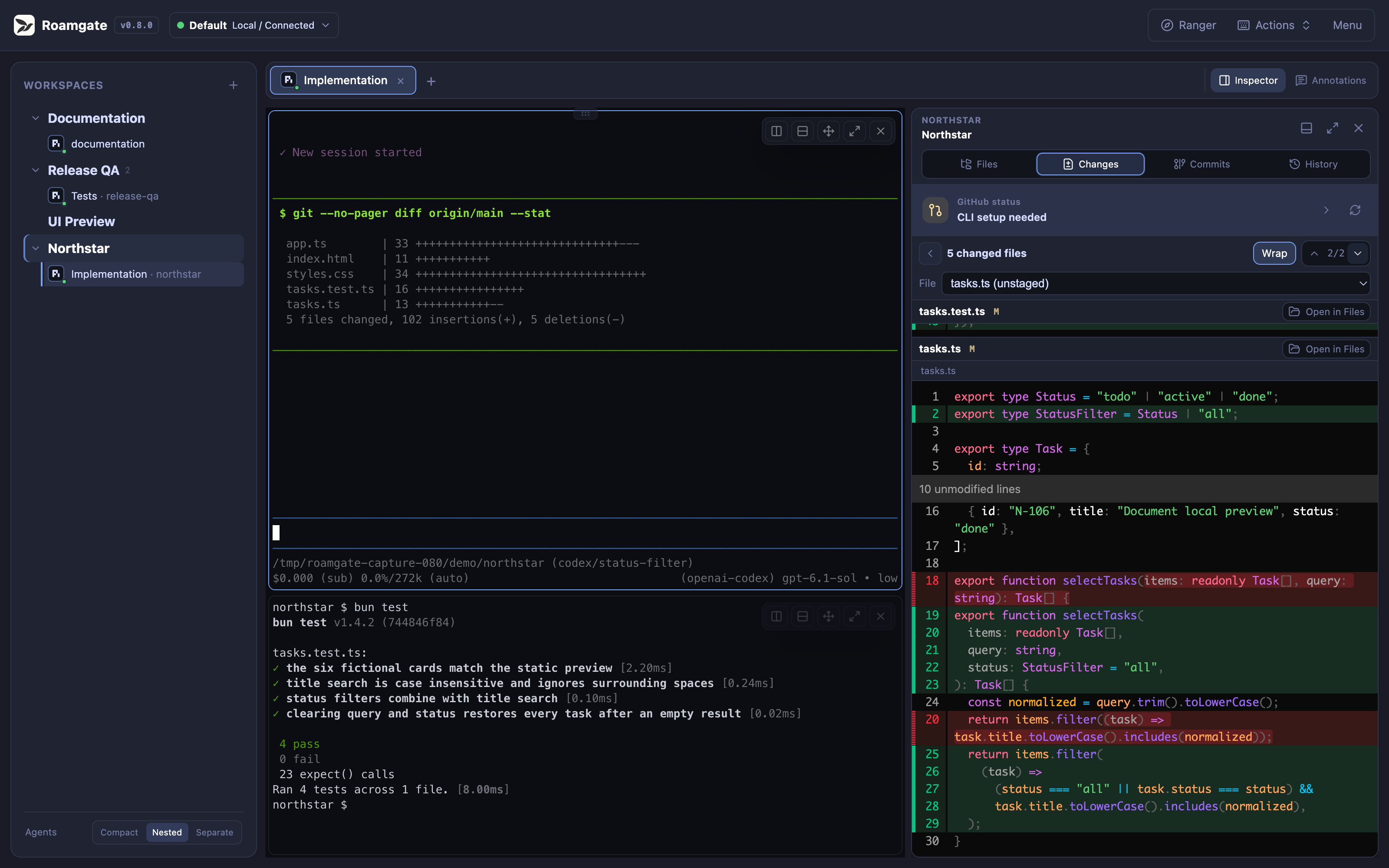
| Object | Meaning |
|---|---|
| Workspace | A working environment, usually a project directory |
| Tab | A layout within a workspace |
| Pane | One terminal in a tab |
| Worktree | A separate Git checkout directory and branch |
Splitting panes does not isolate files. Use worktrees for parallel edits.
2. Everyday work: verify what the agent changed
Give the agent one task
- Select your project, create a tab, and split it right from the pane menu.
- Start an installed, signed-in agent on the left; keep a shell on the right.
- Paste this prompt, review it, and submit it yourself (model usage may cost money):
Read this project's README and add a short first-run example.
Check the project's actual commands first; do not invent flags.
Modify only the README. Do not install dependencies, commit, or push.
When finished, explain what changed and what you have not actually verified.
Use the command menu to find workspaces, files, tabs, panes, and agents, and the recent pane switcher to jump between panes. See shortcuts.
You are done when: you can find the agent's explanation in Agent
History. A done status does not mean checks passed. Missing history? See
session inspection.
Review the file and diff
- Open File Explorer, select
README.md, and switch between rendered and source views. - Open Diff Viewer > Working tree and read the changed lines.
- Search (
Cmd/Ctrl+F) for the new command and check it against the project.
You are done when: you can point to the change and confirm its command works.
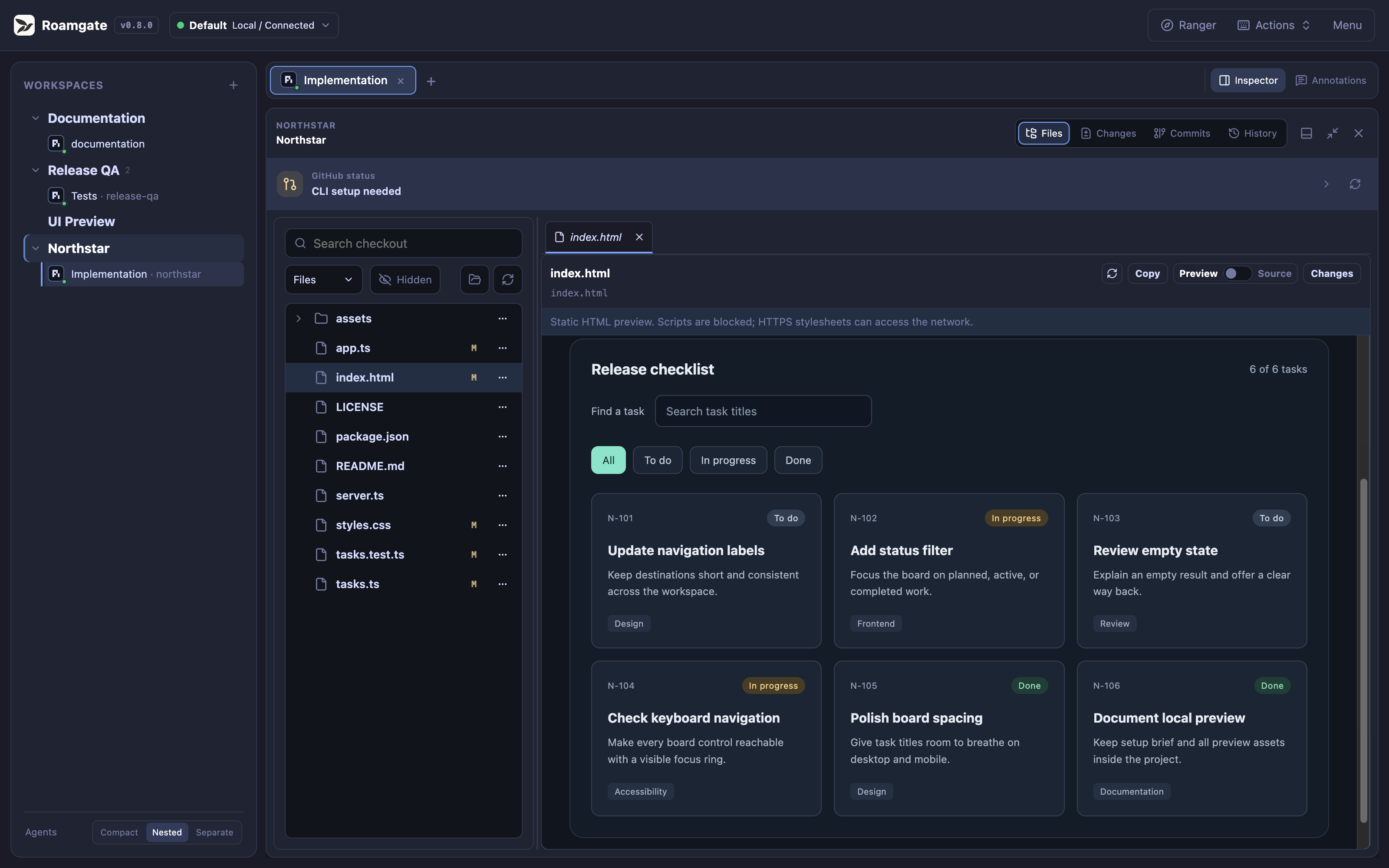
Uploads, deletions, and SSH file operations change real files on the target host.
Send precise feedback
- Click or drag diff line numbers and add a comment, such as "Use the dev command in package.json."
- Review it in Annotations, then pre-fill the agent pane's input.
- Check the message in that pane and press Enter yourself.
You are done when: the agent receives your feedback with its context. Pre-fill never submits. Drafts stay in this browser.
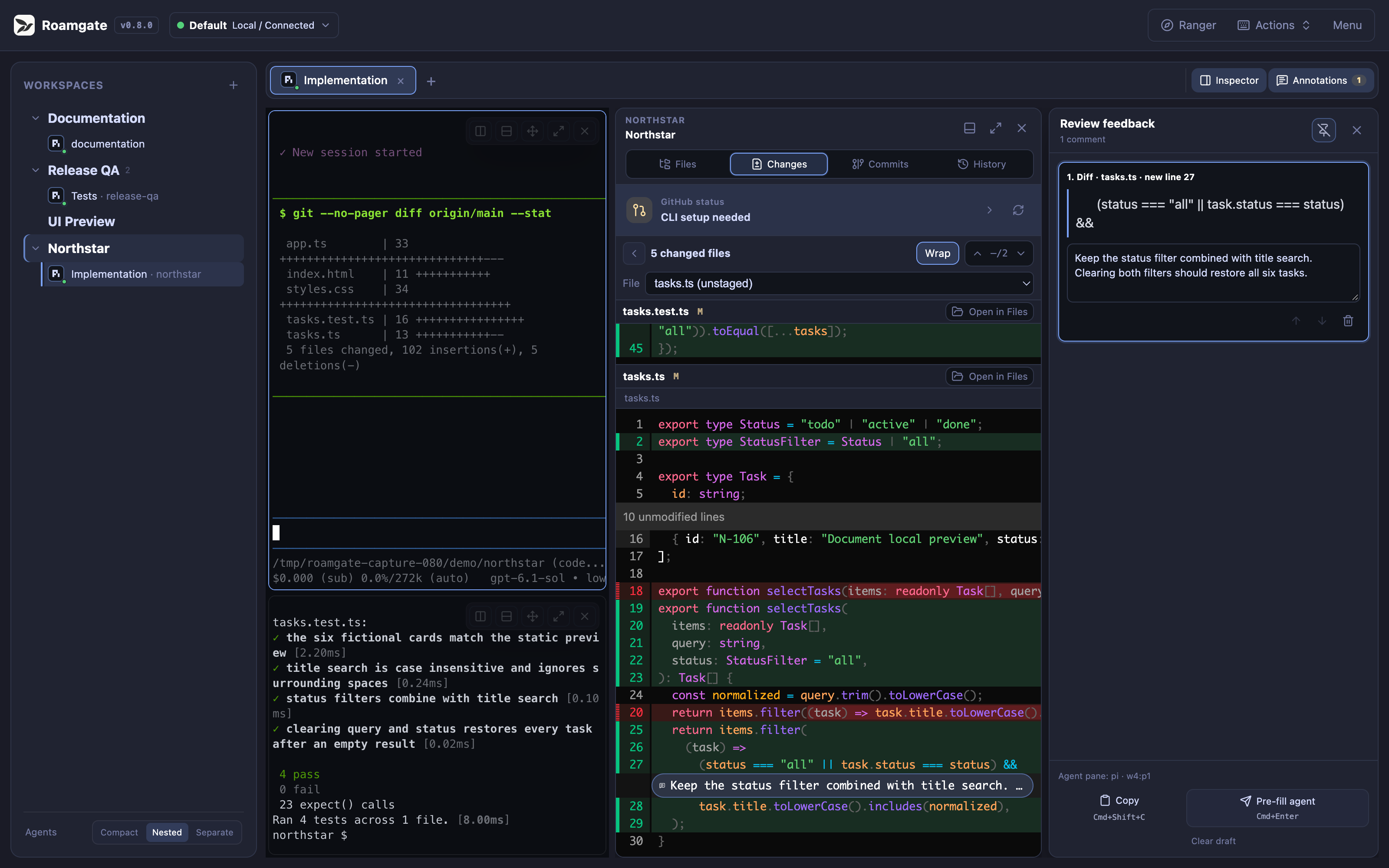
No commit is needed for this exercise. Discard Unstaged loses changes and Delete Untracked deletes files; confirmation is not a backup.
3. Parallel work and mobile access
Separate parallel edits with worktrees
- Make sure
originis reachable. Reviewroamgate.json(or legacypaseo.json): its hooks are on by default and run on the host. Disable Worktree hooks if you do not trust them. - Open Worktree Lifecycle and create a worktree. It starts from
origin's latest default branch and does not copy uncommitted files. - Run
pwdandgit statusthere before starting another agent.
You are done when: parallel tasks use different directories and branches. Save wanted results before removing a worktree; a failed teardown hook blocks removal.
Continue from your phone
Set up Tailscale + Serve first: 127.0.0.1 on a phone means the
phone itself.
- Open Trailhand's HTTPS URL on your phone, pair it (run
trailhand pairon the computer), and select your pane. - Use the floating shortcuts for Ctrl and arrow keys, and open Changes to review the diff.
- Adjust Configuration > Appearance scale or terminal font size if needed, then install the PWA:
| Browser | Install action |
|---|---|
| iPhone/iPad Safari | Share > Add to Home Screen |
| macOS Safari 17+ | File > Add to Dock |
| Chrome/Edge | Browser menu > Install app |
You are done when: the home-screen icon opens your project. Install your Trailhand URL, not this tutorial site.
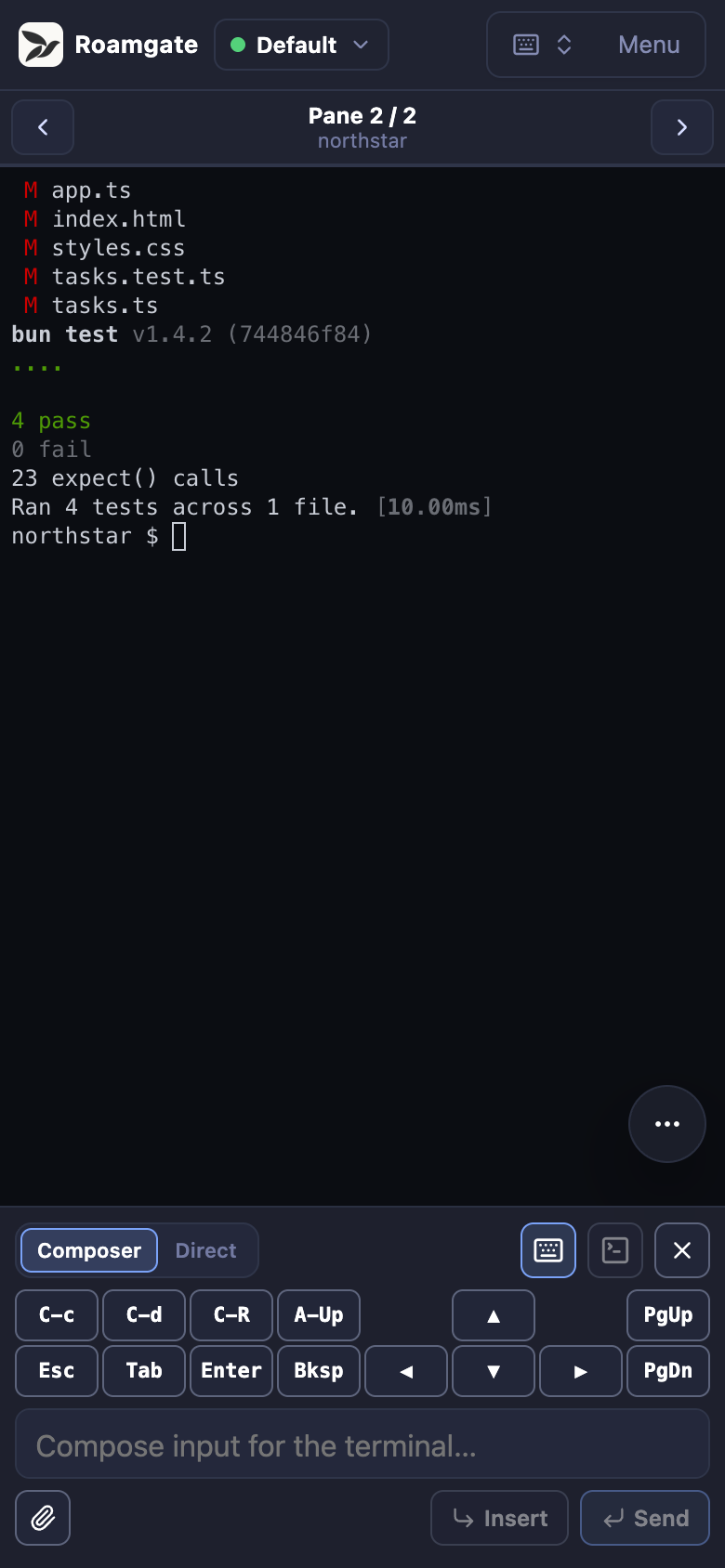
A PWA is not offline access: host sleep, a stopped service, or lost VPN interrupts it. Notifications are best-effort. Everyone you let in has full terminal and file access, so do not share the URL like a read-only link.
4. Remote access: choose the right connection
| Goal | Route |
|---|---|
| Regular phone/computer access | Tailscale + Serve |
| Local Trailhand controlling a remote Herdr | SSH profile (Linux/macOS bridge) |
| Another computer using a remote Trailhand | SSH port forwarding |
| Temporary access between your own computers | Tailcat |
None of these need router port forwarding.
Safety checks
- Admit only fully trusted people/devices. UI access has the Trailhand user's authority.
- Use normal runtime for forwarded access: loopback requires pairing too. Keep
pairing codes and links private; mint them with
trailhand pairon the Trailhand host. Lost your only paired device? Runtrailhand pairon the host again, then revoke the lost one (and anything you do not recognize) in Configuration > Devices. Any paired device can mint more pairing codes there, so a leaked cookie can add more devices; revoke every one you do not recognize. - Use trusted HTTPS/encrypted tunnels and restrict listener/access policy. Authentication alone adds no TLS, permission roles, or sandbox. See Security for pairing limits.
- Keep pairing codes, pairing links, and Tailcat addresses out of screenshots, issues, chats, and committed configuration. Read Security.
Tailscale + Serve: regular private access
Tailscale connects your devices privately; Serve gives Trailhand an HTTPS address reachable only inside your tailnet.
-
Install Tailscale on both devices, join the same tailnet, and check
tailscale status. -
Restrict access to the intended users and devices on port 443.
-
On the Herdr host, run Trailhand on loopback:
trailhand --host 127.0.0.1 --port 8787If a service already runs it, set
HOST=127.0.0.1in its environment file and runtrailhand service restartinstead of starting a second copy. Trailhand still requires a paired device behind Serve. -
If
tailscale serve statusshows port 443 at/is free, run:tailscale serve --bg --https=443 http://127.0.0.1:8787Approve the HTTPS certificate prompt. Hostnames appear in public certificate logs, so avoid sensitive names.
-
On your phone (with Tailscale on), open the printed HTTPS hostname, pair the browser (
trailhand pairon the host), and runpwd. Confirm devices outside your access rules cannot connect.
You are done when: it works over cellular and excluded devices are denied.
Serve is private; Funnel is public. Never use funnel here. To stop
sharing:
tailscale serve --bg --https=443 off
tailscale serve status
Avoid tailscale serve reset, which clears all Serve settings. For daily use,
run Trailhand as a user service on
loopback.
SSH: remote Herdr or remote web interface
Option A: local Trailhand, remote Herdr (needs a Linux/macOS bridge; the remote host can be Unix or Windows).
- Make sure plain
sshworks non-interactively, put keys, ports, and jump hosts in~/.ssh/config(for example aliasworkbox), and start Herdr remotely. - In Trailhand's connection selector, add an SSH profile with destination
workboxand the remote OS. Leave Unix socket paths empty. For Windows, see requirements. Connect and runpwd.
Or start a dedicated bridge for that host:
trailhand --ssh-host workbox --host 127.0.0.1
Files, Git, uploads, and hooks then run on the remote host.
Option B: forward a remote Trailhand's web port. Both services stay remote; this also works with Windows OpenSSH. On the visiting computer:
ssh -N -o ExitOnForwardFailure=yes -L 127.0.0.1:18787:127.0.0.1:8787 workbox
Open http://127.0.0.1:18787 on that computer and pair the browser with
trailhand pair run on the remote host. Ctrl+C stops forwarding.
Tailcat: temporary access between trusted computers
Tailcat is an experimental Tailscale tool that connects two computers without a tailnet account. It has no access policies and this project has not verified it end to end. Use Tailscale for phones.
-
Run Trailhand at
127.0.0.1:8787on your work computer and check it locally. Keep a paired device handy (or runtrailhand pairon this computer). -
In another terminal there, run:
tailcat serve --key=new 8787 -
Privately send the printed
tc...address to the visiting computer and run:tailcat forward tcREPLACE_WITH_PRIVATE_ADDRESS 18787:8787Keep it on
127.0.0.1; never add--bind=0.0.0.0. -
Open
http://127.0.0.1:18787, pair the browser, and runpwd. -
Press Ctrl+C in both terminals and confirm the URL stops working.
You are done when: access works and ends when forwarding stops. Treat the address as a secret: it contains a key. See Tailcat's security model.
5. Troubleshoot the hop that failed
Check in order:
- On the Trailhand host, run
curl -fsS http://127.0.0.1:8787/healthz(curl.exein PowerShell). If refused, check the process, port, or service. - Open the page locally. If terminals fail, check Herdr, the selected connection, and the logs before touching the network.
- Once local access works, check the route:
tailscale serve status, the SSH forward, or both Tailcat processes. - If typing fails, check the selected pane and that your proxy supports WebSockets.
| Symptom | First check |
|---|---|
Phone cannot reach localhost | Use Serve's HTTPS hostname. |
| Page shows the pair screen | Run trailhand pair on the host and open the link or type the code. |
| Pairing says the code is locked or expired | Run trailhand pair again for a fresh code. |
| Address already in use | A service or plugin may already run Trailhand. |
| SSH history is empty | Check session lookup limits. |
| Clipboard or PWA restricted | Use trusted HTTPS without certificate warnings. |
trailhand doctor checks most of this automatically. See
Deployment for pairing, services, and debug logs. Never
disable authentication or open the firewall wide; share only redacted logs when
asking for help.
Completion check
- I know which workspace, tab, and pane receives my input.
- I reviewed the actual diff; an agent's "done" is not verification.
- I know which host receives file and Git operations.
- For remote access, I know who can connect and how to stop sharing.
References
Features and shortcuts · Deployment · Security · Architecture · Tailscale Serve · Serve CLI · Tailcat
This Markdown is the canonical tutorial; the Pages build renders it to HTML.